
295 S. Van Dorn
St. Alexandria, VA 22304
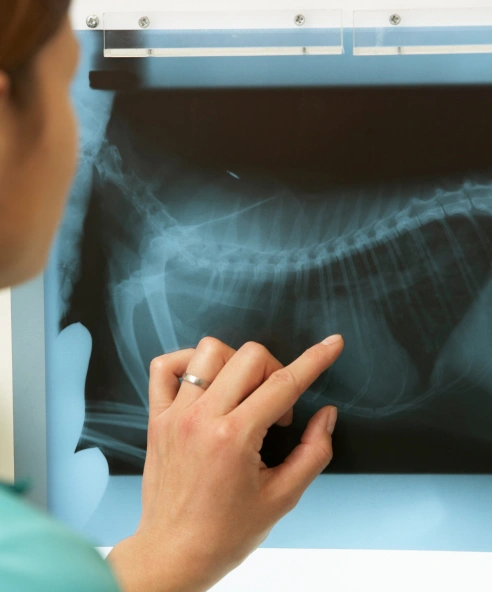

Saving Lives With Cutting-edge Imaging
Caring Hands Animal Hospital employs radiology and ultrasound as diagnostic tools to enhance pet care. An ultrasound, or sonogram, works by using sound waves from a probe that are converted into images. These images are shown on a monitor, offering the veterinarian a two-dimensional 'picture' of your pet's internal organs.
X-ray, or radiology, is a useful tool for imaging bones, internal organs, and soft tissue structures. For optimal evaluation of your pet's medical issue, we often recommend both digital x-rays and ultrasound. Digital x-rays show the dimensions, form, and placement of organs, while ultrasound provides a view of the organs' internal details. Ultrasound is a non-invasive procedure that pets generally handle without issue.
Extensive Imaging and Diagnostic Options for Pets
We provide a comprehensive selection of diagnostic services aimed at accurately determining your pet's health status. Our advanced imaging equipment, such as digital radiology and ultrasound, facilitates swift identification of medical conditions, allowing us to commence appropriate treatment immediately.
Ultrasound
Ultrasound, or sonography, uses sound waves emitted from a probe to create images, which are then displayed on a screen. This provides a two-dimensional visual representation of your pet's internal organs. It allows veterinarians to examine various organs and systems, including the heart, liver, gallbladder, spleen, kidneys, pancreas, and bladder.
For a comprehensive assessment of your pet's condition, combining digital radiographs (X-rays) and ultrasound is often recommended. Digital X-rays reveal the size, shape, and position of organs, while ultrasound provides detailed information about their internal structure. Ultrasound is a minimally invasive and well-tolerated procedure for most pets.
To ensure clear imaging during an ultrasound, the abdomen's hair may be clipped. Gel is applied, and the probe is systematically moved across the abdomen to capture images of each organ.
Because ultrasound provides real-time imaging, results are typically available immediately. However, in some cases, images may be sent to a veterinary radiologist for further evaluation, which can delay the final report by a few days.
Anesthesia is generally not required for ultrasound examinations. The procedure is painless, and most pets lie comfortably on a blanket during the scan. Occasionally, a sedative may be necessary for very anxious or uncooperative animals.
Ultrasound's ability to diagnose pregnancy, evaluate internal organs, and assess heart function makes it an invaluable, non-invasive tool for safeguarding your pet’s health.
Radiology
Radiology, or x-ray, plays a crucial role in diagnosing conditions by imaging bones, internal organs, and soft tissues. Veterinary radiology has significantly advanced in recent years, and Caring Hands Animal Hospital is pleased to provide cutting-edge digital radiology.
Our digital radiology system offers the following advantages:
- Enhanced image clarity and manipulation, reducing the need for repeat exposures.
- Reduced radiation exposure for both pets and our team.
- Shorter procedure times, potentially minimizing the need for sedation.
- High-quality images that can be promptly shared with specialists via email and provided on a CD for your convenience.
- Faster diagnostic results, enabling quicker treatment initiation.
- Environmentally friendly operation, eliminating the use of film and hazardous processing chemicals.