1400 Bridgeport Way Suite 108 Suffolk, VA 23435

Comprehensive Wellness Care for Every Stage of Your Pet’s Life
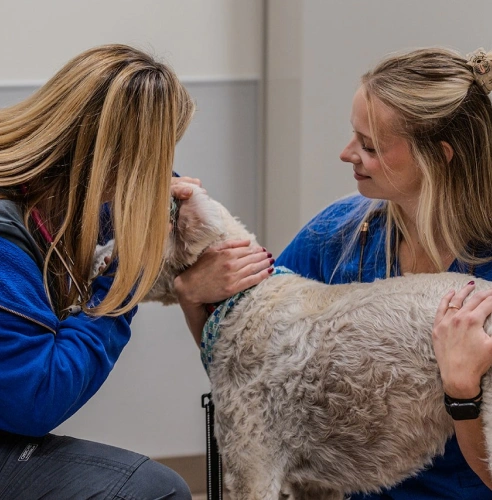
Caring Hands Animal Hospital places a high value on preventative care and wellness visits for ALL pets. From the puppy and kitten stages, throughout adult life, and into the senior years, preventative care can help your pet live a longer, healthier life by preventing diseases and catching illness in its early stages.
Individualized Medicine
Preventive care is tailored specifically to each pet, with recommendations made relative to your pet’s age, location, and lifestyle. The doctors of Caring Hands Animal Hospital are likely to recommend many of the following items as part of the lifetime care plan for your pet:
Puppies & Kittens should be seen at approximate ages 8, 12, and 16 weeks for a comprehensive physical exam with the veterinarian, fecal testing & parasite deworming, vaccinations, and to start flea, tick, and heartworm prevention. For more information on Puppy & Kitten Care please click here.
Spaying or neutering dogs and cats is recommended around 6 months of age to prevent pregnancy, avoid overpopulation, and eliminate the risk of uterine and testicular cancer.
Adult pets between the ages of 1 to 6 years should be seen for wellness visits at least once annually for a comprehensive physical exam with the veterinarian, fecal testing, vaccine boosters, and ongoing flea, tick, and heartworm preventatives.
Dental care will be discussed during each physical exam, and a dental cleaning may be recommended when tartar and/or gingivitis are noted. To learn more, please click here.
Senior pets age 7 and over should be seen twice yearly for a physical exam, fecal testing, vaccine boosters, ongoing flea/tick/heartworm prevention, and lab work (blood and urine testing) to monitor health and check for common age-related illnesses. To learn more about Senior Care, please click here.
Preventatives
The doctors and staff at Caring Hands Animal Hospital recommend year-round protection against fleas, ticks, and heartworms for all pets, indoor and outdoor. For more information on parasites, please visit the Companion Animal Parasite Council website. Fleas and ticks exist year-round in our climate, and may even be carried inside unknowingly on your shoes and clothing. Administering a topical or oral dose of Nexgard, Simparica, Bravecto, or other veterinarian approved medication can be enough to keep fleas and ticks off of your pet and avoid the diseases associated with these parasites. Heartworms, carried by mosquitos, infect dogs and cats and cause asthma-like symptoms and can often be fatal. Heartworm preventative is as simple as a monthly treatment of a liquid topical or flavored chewy treat. Depending on your pet’s specific needs, Caring Hands may recommend Interceptor, Heartgard, Revolution, or other preventative, for lifelong heartworm preventative. For more information on heartworms, we recommend the American Heartworm Society. All preventatives mentioned may be purchased through our price-competitive online pharmacy.
Protecting Your Pets in Suffolk
We know how much your pets mean to your family. That’s why we consider microchipping a vital step in their lifelong care. Whether your dog is a regular at the local parks or your cat prefers the comfort of home, a microchip provides an invisible safety net that never expires.
How it Works: A microchip is a small, harmless device—roughly the size of a grain of rice—placed just under the skin. It contains a unique ID number that can be scanned by shelters and veterinarians across the country, ensuring your pet can always be identified, even if they lose their collar.
Why Microchipping is Essential:
- Permanent ID: Unlike tags that can fall off or become unreadable, a microchip is a permanent form of identification that stays with your pet for life.
- Quick and Simple: The procedure is fast, safe, and easily performed during a routine visit. It’s no more uncomfortable than a standard vaccination.
- Proven Recovery: Pets with microchips are significantly more likely to be reunited with their families if they ever wander off.
- Travel-Ready: If you’re heading out on a road trip or moving, a microchip gives you the confidence that your pet is protected wherever they go.
Vaccinations
Your veterinarian will be the best resource to determine the appropriate course of vaccinations for your pet’s lifestyle. Outlined below is a list of vaccinations available through Caring Hands Animal Hospital. Please click on each one to find out more in depth information.
1. Rabies
Rabies is a fatal viral disease carried by wildlife and other mammals in our area. It is a zoonotic disease, meaning it can be passed from animals to humans.
The disease is transmitted through the saliva of an infected animal, usually through a bite.
Vaccination is required by Virginia and Maryland state law for all dogs and cats.
Symptoms:
- Fever
- Seizures
- Change in behavior (over excitability, shyness, aggression)
- Excessive salivation
- Paralysis
- Inability to swallow
The rabies vaccination is given annually to cats and dogs initially as a 1-year vaccine, and then every 3 years to dogs.
2. Distemper (DHPP and FVRCP)
Distemper is a a highly-contagious viral disease with no known cure and variations can be found in dogs, cats, and ferrets, as well as certain wildlife animals.
The disease is spread through both direct and indirect contact.
Symptoms:
- Weight loss
- Lethargy
- Fever
- Vomiting
- Diarrhea
- Nasal discharge
The vaccines available are a combination of species-specific common viruses.
For dogs, the vaccine offers protection from intestinal viruses including Distemper, Hepatitis, Parainfluenza, and Parvovirus.
For cats, the vaccine offers protection from upper respiratory viruses including Rhinotrachitis, Calicivirus, and Panleukopenia.
These vaccines are often abbreviated to DHPP and FVRCP.
Distemper vaccines are given as a series to puppies and kittens, annually to young adult pets, and every 3 years in older adults and seniors.
3. Leptospirosis
Leptospirosis is a bacterial disease that is shed in the urine of infected wildlife. Typically, it is transmitted through contaminated water sources like puddles, retention ponds, and slow moving creeks. Your veterinarian will discuss you and your pet’s lifestyle with you to determine if your pet is at risk for contracting Leptospirosis, and if vaccinating against it is appropriate.
The disease is commonly referred to as “Lepto,” and can cause kidney and liver failure. Leptospirosis is a zoonotic disease, meaning it can be passed from animals to humans.
Symptoms:
- Fever
- Lethargy
- Decreased appetite
- Increased thirst
- Vomiting
- Unusual amounts of urine (larger or smaller)
- Muscle and joint pain
- Bleeding or brusing
The Lepto vaccine is given as a series of two, and then annually to adult and senior dogs.
4. Lyme Vaccine
Lyme disease a common infectious disease transmitted from ticks to both humans and dogs. It is very prevalent in the Northern Virginia area, and depending on you and your pet’s lifestyle, it may be recommended for your pet.
The ticks typically pick up the bacterial disease from wildlife, and then when they feed on your pet, they transfer the disease. In order for the disease to be transferred to your pet, the tick needs to be attached for at least 48 hours. However, the ticks that carry the disease are often very small and difficult to find, which makes it that much more important to have your pet on both a tick preventative and vaccinated.
Unlike with humans, dogs do not typically develop the “bulls-eye” rash. The lack of a physical indicator of being bit by a tick, coupled with the fact that many dogs do not show symptoms of Lyme disease right away (or at all). However, this do not mean that the disease does not exist.
If a pet is positive for Lyme disease, antibiotics can be given to try to eliminate as much of the bacteria in the body. It is difficult to completely eliminate the bacteria in the body, so even with a course of antibiotics helping symptoms, a low-level infection may always be present.
Symptoms:
- Some dogs can show no symptoms at all (asymptomatic)
- Pain
- Limping
- Lameness
- Inappetence
- Fever
- In severe cases, kidney and heart disease can develop
Lyme vaccines are given to puppies as a series of two, and then annually to adult and senior dogs.
5. Bordetella
Bordetella, also known as “Kennel Cough”, is a highly contagious upper respiratory disease in dogs.
Easily transmitted through direct contact or the air; vaccination is recommended for all dogs that interact with other dogs in their neighborhood, boarding and daycare facilities, dog parks, and groomers.
Unvaccinated puppies or young dogs, and dogs that have a compromised immune system may experience severe symptoms.
Symptoms:
- A dry, hacking cough
- “Honking” cough
- Nasal discharge
- Decrease in appetite
- Lethargy
- Fever
The Bordetella vaccine may be given as an injectable or “intra-nasal” (in the nose), and are given every 6-12 months. It is recommended that you check with the facility you are taking your pet to, to find out what their requirements are.
6. Canine Influenza
The Canine Influenza was a new virus in 2012, that mutated from an existing strain. Since the disease was a new strain, any dog that was exposed to it, was likely to contract it and become infected.
A vaccine was developed to help protect dogs and is available if needed. It was found to not be contagious to humans.
Symptoms:
- Discharge from the nose or eyes
- Coughing (can be productive or non-productive)
- Labored breathing or increased rate
- Lethargy
- Vomiting
- Diarrhea
- Decrease in appetite
We recommend that you check with your pet’s boarding, grooming, or day care facilities to see if they require this Influenza vaccine before your pet visits with them. You can also discuss with your veterinarian if they feel your pet’s lifestyle warrants the need for this vaccine.
The Influenza vaccine is given as a series of two, and then annually to adult and senior dogs.
7. Feline Leukemia
Feline Leukemia, or FeLV, is a viral infection that is spread from cat to cat through saliva, feces, and during lactation.
Nursing kittens, feral or outdoor cats, and cats living in multi-cat households are at risk of infection. There is currently no known cure for Feline Leukemia.
A blood work screen can be completed in hospital to determine if a patient is infected with Feline Leukemia.
Symptoms:
- Some cats can show no symptoms at all
- Respiratory symptoms (coughing, sneezing, discharge from nose or eyes)
- Decrease in appetence
- Lethargy
- Fever
- Loss of weight
- Vomiting
- Diarrhea
The leukemia vaccine is given as a two-part series to kittens and annually to adult and senior cats.