
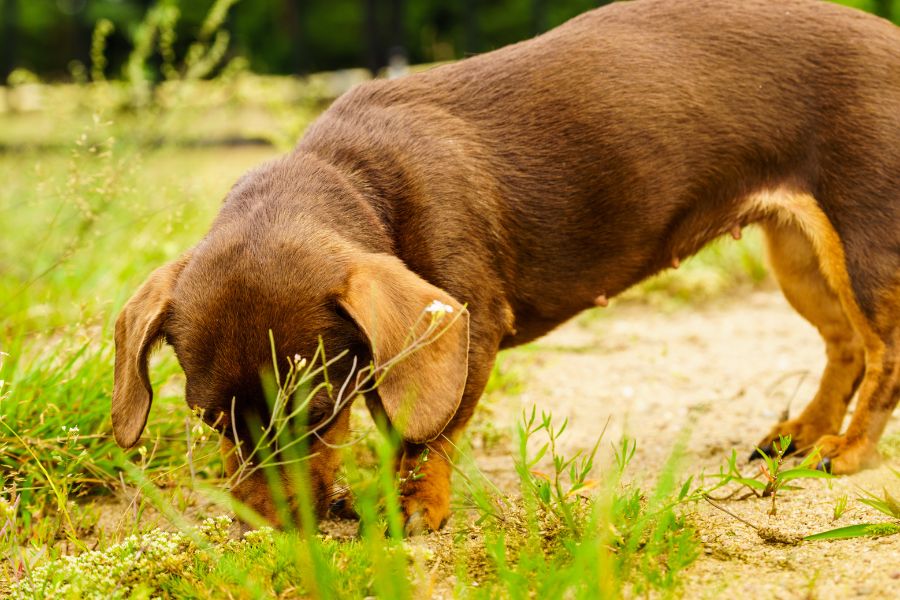
Dogs chewing on grass is a behavior that puzzles many dog owners. The question often arises: Does eating grass actually help dogs with digestive problems? This blog dives deep into this curious habit, examining the benefits, risks, and what science says about it, while offering practical advice for dog parents.
Nature’s Remedy or Just a Quirk?
It’s true that many dogs turn to grass when they feel uneasy stomach-wise. Grass is a good source of fiber, which can assist in easing constipation and promoting better bowel movements. Moreover, the fibrous texture may help clean out the digestive tract, encouraging smooth digestion.
Some dogs chew grass to soothe nausea or upset stomachs. Often, they might vomit after eating grass, possibly because it irritates the stomach lining, promoting the expulsion of indigestible or harmful substances. However, research reveals that only a minority of dogs vomit afterward, indicating that grass-eating may not always be a deliberate act to induce vomiting.
Fiber and Digestion: The Grass Connection
Fiber plays a vital role in any dog’s diet by promoting a healthy gut and proper stool consistency. Dogs on commercial diets generally get enough fiber, but if your dog’s diet lacks it, they might instinctively munch on grass to fill this nutritional gap. The natural chlorophyll and nutrients in grass also offer cleansing and detoxifying properties, supporting overall digestive health.
When Is Eating Grass a Sign to Seek Help?
While occasional grass eating is usually harmless, excessive consumption accompanied by symptoms like persistent vomiting, diarrhea, lethargy, or constipation could indicate underlying health issues such as gastrointestinal upset, pancreatitis, or inflammatory bowel disease.
In these cases, it’s crucial to consult a vet, and a trusted veterinary clinic in Bristow can provide specialized care for your pet’s digestive health.
Beyond Digestion: Other Reasons Dogs Graze on Grass
Besides digestive benefits, dogs might eat grass out of boredom, stress, or simply because they like the taste and texture. It’s also possible that some dogs have a dietary deficiency, prompting them to seek nutrients from grass.
In conclusion, eating grass can help dogs with digestive problems mainly through providing fiber and aiding stomach comfort, but it’s not a cure-all solution. If your dog frequently eats grass or shows other symptoms of discomfort, visiting a veterinary clinic in Bristow, VA for a full checkup is advisable. This ensures your pet stays healthy and happy while unraveling the mystery behind this green snack.
Frequently Asked Questions (FAQs)
Q1: What does it mean when dogs eat grass?
A: Dogs eating grass can indicate several things—from normal behavior to a sign of trying to relieve digestive discomfort, to seeking extra fiber or nutrients. However, it’s usually harmless unless excessive or accompanied by illness.
Q2: Should you allow your dog to eat grass if they want to?
A: Occasional grass eating is generally safe, but make sure the grass isn’t treated with harmful pesticides or chemicals. Monitor your dog’s health and consult your vet if the behavior increases or is linked with symptoms.
Q3: Could my dog’s grass eating point to a nutritional deficiency?
A: Yes, sometimes dogs eat grass because their diet lacks sufficient fiber, vitamins, or minerals. Ensuring a balanced diet and consulting a vet can help address such deficiencies.
Q4: Do dogs eat grass when they’re sick?
A: Some dogs might eat grass when feeling unwell to soothe nausea or an upset stomach. Yet, many dogs eat grass when healthy, so it doesn’t always mean illness.