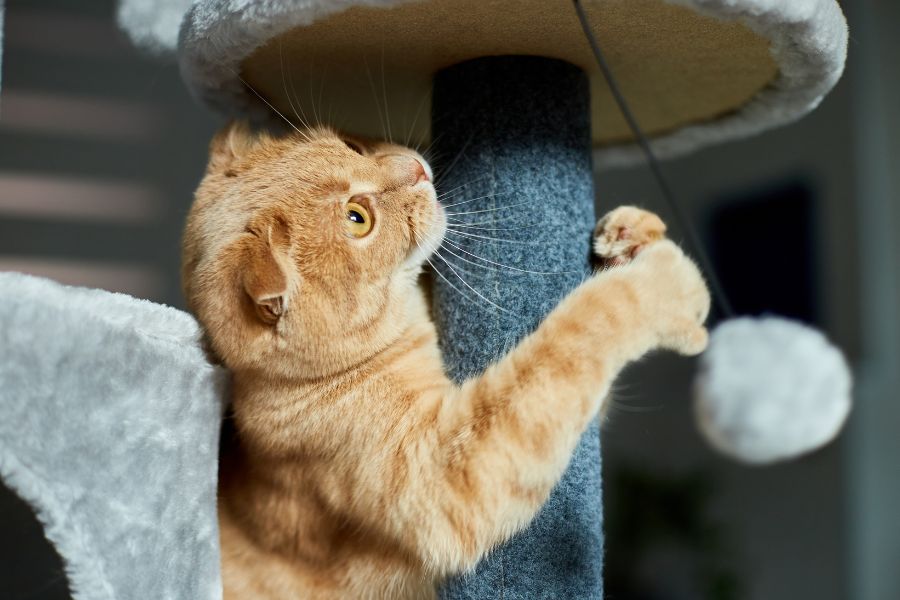
If you share your home with a cat, chances are you’ve watched them dig their claws into your favorite couch or chair. It can feel frustrating, especially when it happens repeatedly. But scratching is not bad behavior—it’s natural, necessary, and deeply rooted in your cat’s instincts.
This guide breaks down why cats scratch furniture and offers clear, practical steps on how to stop cats from scratching furniture without stress—for you or your pet.
Why Do Cats Scratch Furniture?
Understanding the “why” is the first step to solving the problem. Cats don’t scratch to annoy you. They scratch because they need to.
1. Claw Maintenance
Cats shed the outer layer of their claws. Scratching helps remove this layer and keeps their claws sharp and healthy.
2. Marking Territory
Cats have scent glands in their paws. When they scratch, they leave both a visual mark and a scent signal. This tells other animals, “This space is mine.”
3. Stretching and Exercise
Scratching allows cats to stretch their muscles, especially in their shoulders and back. It’s part of their daily physical routine.
4. Stress Relief
Scratching helps cats release tension. Changes in the home—new pets, visitors, or even rearranged furniture—can trigger more scratching.
5. Attention-Seeking Behavior
If your cat learns that scratching gets a reaction, they may repeat it. Even negative attention can reinforce the habit.
How Do I Stop Cat Scratching Furniture?
The goal is not to stop scratching entirely. The goal is to redirect it to appropriate surfaces. Here’s a clear, effective approach.
1. Provide Better Alternatives
Your cat needs a place where scratching is allowed.
What works best:
- Scratching posts (vertical and horizontal)
- Cardboard scratchers
- Sisal-covered surfaces
Place these options near the furniture your cat targets. Cats prefer convenience.
2. Choose the Right Scratching Surface
Not all scratchers are equal. Cats have preferences.
Test different materials:
- Cardboard
- Sisal rope
- Carpet
- Wood textures
If your cat ignores a scratching post, it may not feel right under their paws.
3. Location Matters More Than You Think
Cats scratch where they spend time. If the scratching post is hidden in a corner, it won’t work.
Place scratchers:
- Near sleeping areas
- Close to commonly scratched furniture
- In social spaces like the living room
4. Make Furniture Less Appealing
You can reduce the appeal of your furniture without harming your cat.
Try these options:
- Double-sided tape
- Furniture covers
- Aluminum foil (temporary deterrent)
Cats dislike sticky or unusual textures, so they will avoid those areas.
5. Use Positive Reinforcement
Reward your cat when they use the correct scratching surface.
Examples:
- Treats
- Praise
- Playtime
This builds a clear connection: scratch here = good outcome.
6. Trim Your Cat’s Nails Regularly
Shorter nails reduce damage and make scratching less destructive. Aim to trim your cat’s nails every 2–3 weeks.
7. Try Nail Caps
Soft nail caps are small covers placed over your cat’s claws. They reduce damage without stopping natural behavior.
They are safe and widely used for indoor cats.
8. Address Stress and Anxiety
If scratching increases suddenly, something may be bothering your cat.
Look for triggers:
- New pets or people
- Loud noises
- Changes in routine
Adding enrichment like toys, climbing trees, and regular play sessions can help reduce stress-driven scratching.
How to Stop Cats from Scratching Furniture Fast
If you need quick results, combine these strategies:
Step 1: Block the Target Area
Use tape or covers immediately to protect your furniture.
Step 2: Place a Scratcher Next to It
Give your cat a better option right where they want to scratch.
Step 3: Reward Every Correct Action
Catch your cat using the right surface and reward them right away.
Step 4: Stay Consistent
Mixed signals slow progress. Everyone in the household should follow the same approach.
Common Mistakes to Avoid
Even well-meaning owners can make mistakes that reinforce scratching.
1. Punishing Your Cat
Yelling or physical punishment creates fear. It does not teach your cat where to scratch.
2. Removing All Scratching Options
Cats must scratch. Removing outlets only increases frustration.
3. Ignoring Early Signs
If your cat starts scratching a new area, act quickly before it becomes a habit.
When Scratching May Signal a Health Concern
Scratching is normal, but excessive or unusual scratching can point to underlying issues.
Watch for:
- Sudden increase in behavior
- Signs of anxiety
- Changes in appetite or energy
- Aggressive scratching with vocalization
In these cases, it’s wise to visit our website to explore care options or speak with a veterinary professional.
Creating a Scratch-Friendly Home
A well-planned environment prevents problems before they start.
1. Build a Cat-Friendly Layout
- Multiple scratching zones
- Vertical spaces like cat trees
- Cozy resting spots
2. Rotate Toys and Scratchers
Cats can get bored. Changing things occasionally keeps them engaged.
3. Keep a Routine
Feeding, playtime, and rest should follow a consistent schedule. This reduces stress-related behavior.
Long-Term Success: What to Expect
Training your cat takes time. Some cats adapt quickly, while others need a few weeks.
Signs of progress:
- Less interest in furniture
- Increased use of scratchers
- Calm, relaxed behavior
Stay patient and consistent. Small improvements add up.
Conclusion
Scratching is a natural part of your cat’s life. The key is not to stop it but to guide it in the right direction. By understanding why cats scratch furniture and applying simple, consistent strategies, you can protect your home while keeping your cat happy.
When you’re ready to take the next step, book an appointment with a trusted veterinary team to ensure your cat’s behavior and overall health are on the right track.
Frequently Asked Questions(FAQs):
1. Why does my cat scratch the couch even with a scratching post?
Your cat may not like the texture, height, or location of the post. Try different materials and place it closer to the couch.
2. How to stop cats from scratching furniture at night?
Provide a scratching option near sleeping areas and increase daytime play to reduce nighttime energy.
3. Do cats grow out of scratching behavior?
No. Scratching is lifelong. The goal is to guide where they scratch, not stop it completely.
4. Are deterrent sprays effective?
Some sprays work, but results vary. They are best used alongside training and proper scratching alternatives.
5. Can declawing solve the problem?
Declawing is not recommended. It can cause pain and long-term behavioral issues.
6. How long does it take to train a cat to stop scratching furniture?
Most cats show improvement within 2–4 weeks with consistent training and the right setup.